
Last updated November 16, 2026
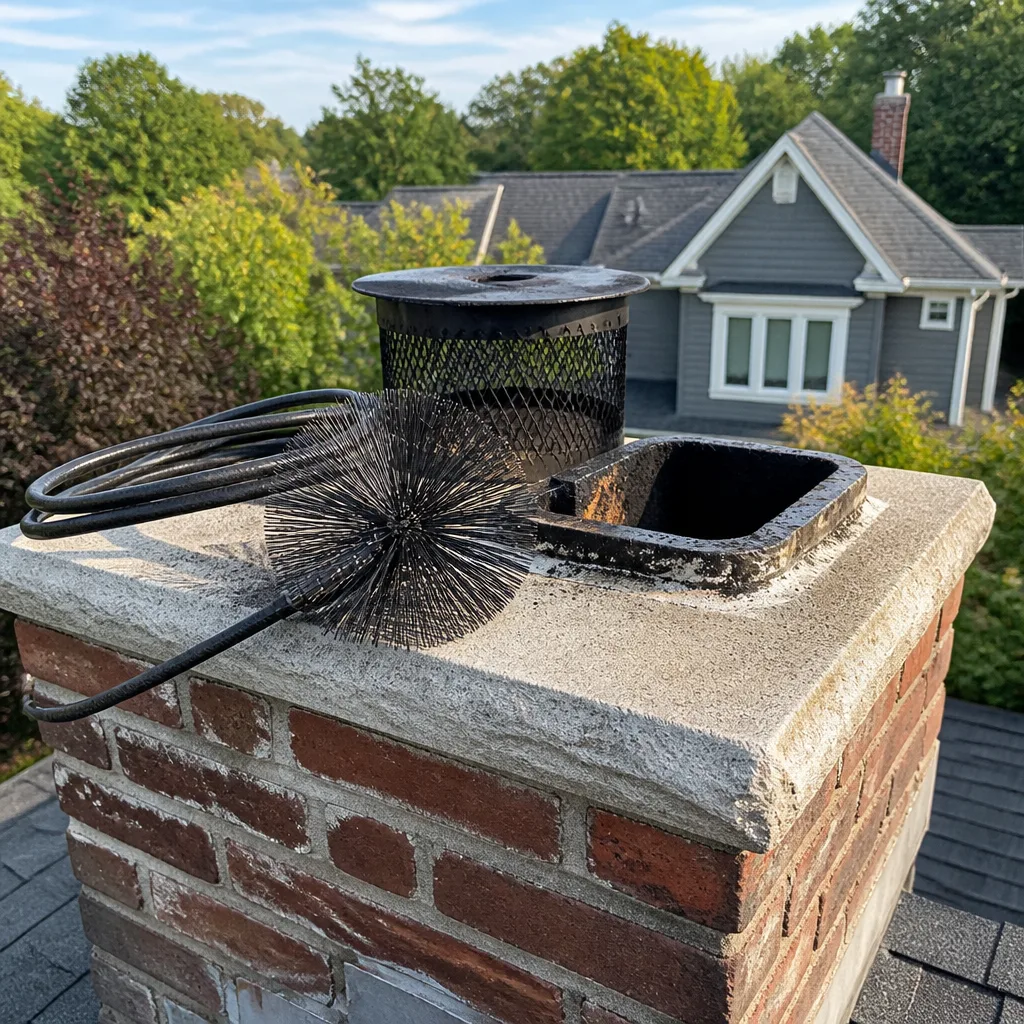 Sweep & inspection
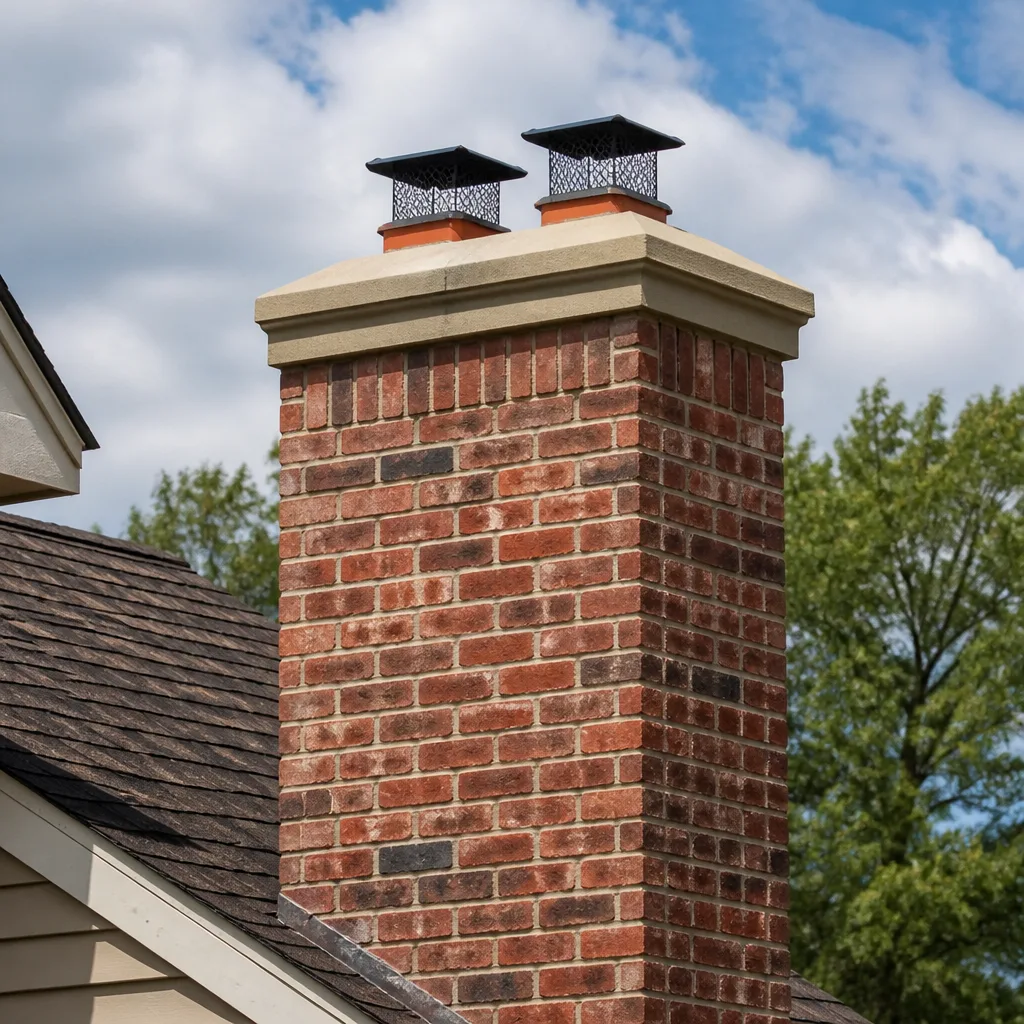 Caps & crowns
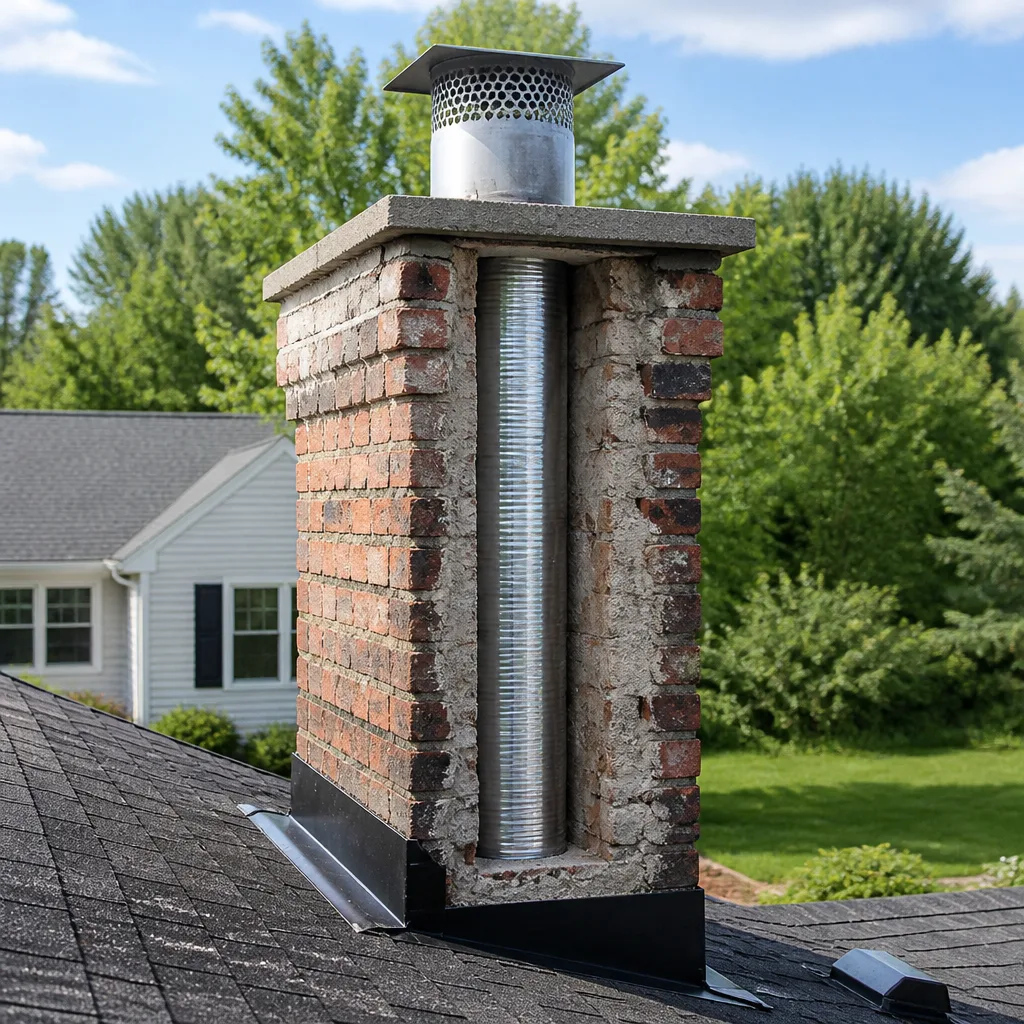 Flue relining
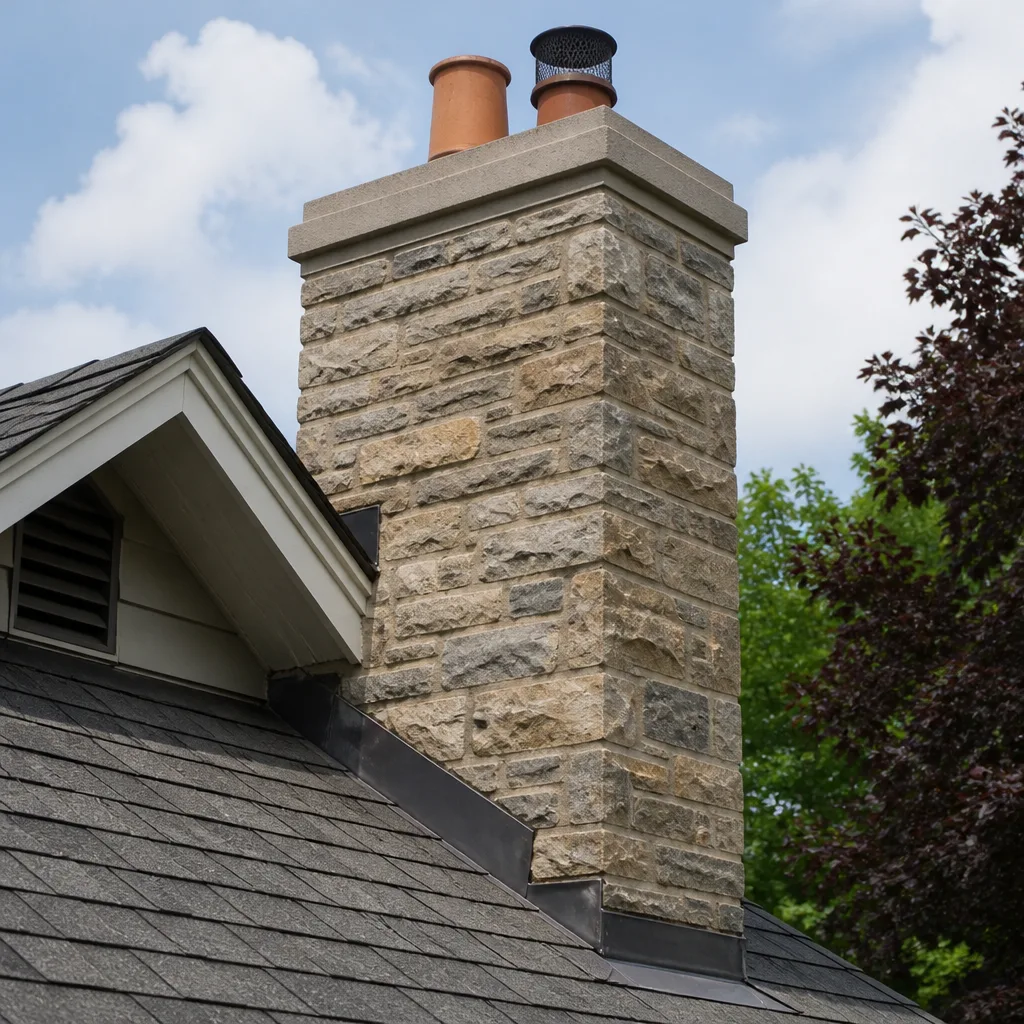 Masonry repair
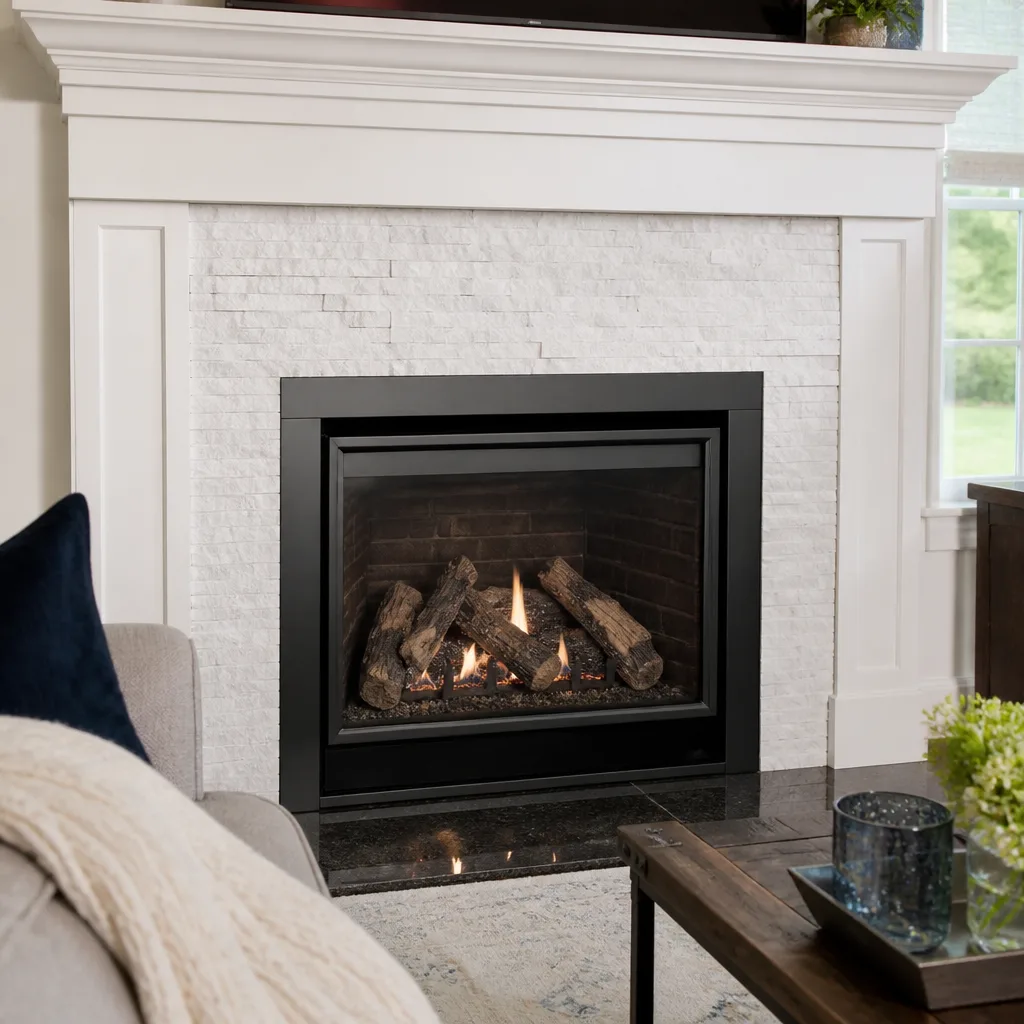 Gas fireplace service
Level 1 sweep and inspection to the NFPA 211 annual standard - flue, crown, cap, and flashing checked and photographed
Chimney sweep logs do not sweep chimneys. They loosen some creosote - which then falls where a brush and vacuum still have to collect it.
DIY vs Professional Chimney Cleaning: The Gresham Homeowner’s Decision Guide
The problem with DIY chimney cleaning isn’t the brushing. It’s that the brush won’t tell you whether what you removed is all there is, or whether there’s a cracked liner hiding behind a layer of soot. A homeowner in Gresham can push a brush up a flue and pull down a bucket of creosote and feel confident the job is done. What that same homeowner can’t see is the third-stage glazing bonded to the flue wall, the hairline crack in a clay tile, or the gap at the smoke chamber that only shows up on camera. This guide walks through when DIY is genuinely safe, when it’s a shortcut you’ll pay for later, and how to tell the difference before you climb onto the roof.
Quick Answer
DIY chimney cleaning is a reasonable choice for a lightly used fireplace with a straight flue, a clean inspection history, and no visible damage, provided you have the right brushes and drop cloths and know what you’re looking at. For most Gresham homes that burn wood regularly through the heating season, professional cleaning is the safer call because a sweep includes camera inspection and liner assessment that a consumer brush kit can’t provide. The deciding factor isn’t the brushing itself. It’s whether you have the tools to know your chimney is actually clean and structurally sound.
Styles & brands we work with
- Sweep & inspection
- Caps & crowns
- Flue relining
- Masonry repair
- Gas fireplace service
Table of Contents
- The Honest Case for DIY (and When It Crosses the Line)
- What a Real DIY Sweep Requires
- The Tasks That Physically Can’t Be Done Without Pro Equipment
- How Gresham’s Wood-Burning Culture Changes the Math
- Your Three-Filter Decision Framework
- What Actually Happens During a Professional Sweep
- The Real Cost Comparison
- Common Mistakes to Avoid
The Honest Case for DIY (and When It Crosses the Line)
We’re not going to pretend a homeowner can’t sweep a chimney. A straight, single-flue masonry chimney serving a fireplace that sees a cord of wood a year is a legitimate DIY candidate. If you’ve had a professional inspection within the last two seasons that came back clean, if your flue tiles run straight up without offsets, and if you’ve never had a chimney fire, brushing is a skill you can learn.
Here’s what that honest case actually requires of you:
- Access to the roof that doesn’t put you in danger. A steep pitch, a metal roof, moss, or wet shingles change the risk. A one-story ranch with a gentle slope and a chimney at the ridge is manageable. A two-story colonial with a steep gable is not, regardless of how careful you are.
- A flue you can see down from the top. If the chimney has a cap with a spark arrestor, you may need to remove it to brush. If it has a top-sealing damper, you almost certainly can’t brush from the top without damaging it.
- A working knowledge of creosote stages. Stage 1 is fluffy soot and brushes off easily. Stage 2 is flaky and crusty and comes off with effort. Stage 3 is glazed, tar-like, and won’t budge with a poly brush. Stage 3 is a fire hazard and needs professional rotary equipment.
- Willingness to stop if something looks wrong. A cracked tile, a gap in the mortar joints, or a rusted damper is the point where you put the brush down and call a professional. Continuing to brush a damaged flue doesn’t make it worse immediately, but it also doesn’t fix the damage you just discovered.
The line gets crossed in three predictable ways. The first is a homeowner who burns a lot of wood, hasn’t had an inspection in years, and assumes the brush is doing more than it is. The second is a homeowner who brushes the flue clean but never checks the smoke chamber, damper, or crown. The third is a homeowner with a wood stove insert, which changes the sweeping geometry entirely and usually requires removing the insert or sweeping through a baffle. Any of those three is a signal to call a professional in Gresham rather than push through.
If you’re unsure which situation you’re in, the cheapest path to certainty is an inspection. You can learn more about what a chimney sweep covers on our service page. An hour of a professional’s time answers the question that a brush can’t.
What a Real DIY Sweep Requires
The single biggest gap between a consumer DIY kit and a professional sweep isn’t the brush head. It’s the rotating system, the rods, and the inspection tools. Consumer kits sold at hardware stores are generally designed for one job on a lightly soiled flue, and they work fine in that narrow case. Here’s what a competent DIY sweep actually needs:
Brushes and Rods
- Polypropylene brush sized to the flue. A 6-inch flue needs a 6-inch brush. A brush that’s too large jams. A brush that’s too small leaves creosote on the walls. Measure the inside of the flue at the top before you buy.
- Chimney rods, not drain rods. Drain rods are flexible and load up with soot, then slip out of the flue and drop. Chimney rods are rigid fiberglass or nylon with threaded ends and lock sets that hold a brush in place.
- Rope and a weight if you’re brushing from the top on a taller chimney. A brush on the end of a rope is controllable, a brush on a loose rod is not.
- Drop cloths and a shop vac rated for fine ash. Soot is fine, it drifts, and it stains fabric and drywall. A regular shop vac will spread soot through the house over hours. Use one with a fine-particle filter and keep the room sealed with plastic.
What Consumer Kits Don’t Include
Consumer brush kits skip the equipment that makes a professional sweep reliable. Missing from the typical kit:
- A rotating head or rotary power brush for stage-3 glazed creosote
- A flue camera with a light and screen for interior inspection
- Pressure or smoke testing tools to check for liner leaks
- Rod lengths long enough to reach through a two-story flue without flexing
- Protective gear rated for falling soot, including a proper dust mask, goggles, and gloves
None of that means DIY is impossible. It means DIY happens with less margin. If you’re going to brush your own Gresham chimney, do it knowing what the missing tools would have caught. Our technician team, with up to 14 years of experience on local chimneys, uses rotary equipment and camera inspection on every job for exactly that reason.
The Tasks That Physically Can’t Be Done Without Pro Equipment
There are jobs a homeowner simply can’t complete with a brush and a flashlight. These aren’t tasks that are merely easier with professional tools. They are tasks where the tool is the task.
- Camera inspection of the flue interior. A homeowner looking up a flue with a flashlight sees the first 5 to 8 feet. Above that, the flue bends, darkens, and disappears. A flue camera on a reel travels the full interior and documents what it finds on video. Without it, you have no idea whether the upper flue is clean or caked with glazed creosote, whether a tile joint has cracked, or whether mortar has washed away between tiles.
- Pressure testing for liner integrity. A cracked flue tile can look structurally fine from the firebox and still leak combustion gases into wall cavities. Pressure testing pushes smoke or air through a sealed top and checks for leaks at the firebox or at the wall. A homeowner can’t perform this test without the sealing equipment and the gauge. It’s one of the reasons we include inspection as a routine part of the sweep.
- Liner assessment and relining decisions. When the flue tile in a Gresham chimney is cracked or spalling, the question isn’t just whether to clean it. It’s whether the flue still meets code and safely contains combustion gases. Answering that requires knowing the offset geometry, the liner material of the day (clay tile is the norm in older Gresham housing stock), and the required clearance to combustibles. That assessment determines whether the recommendation is a HeatShield resurfacing or a full DuraFlex flexible liner installation.
- Smoke chamber and damper correction. The smoke chamber above the firebox is the most neglected part of most chimneys. It’s a corbelled, jagged area that traps creosote, and a brush doesn’t clean it effectively. Professional sweeps use a specific tool to reach the smoke chamber walls and inspect the damper assembly from above.
- Crown and cap work. Cap replacement and crown repair are roofing-adjacent work, and they’re often the reason a chimney is leaking in the first place. Gresham caps we install, drawn from Gelco, Famco, and Copperfield lines, are sized to the chimney top and installed with attention to the flashing detail, which is where most leaks start.
If any of these five come up during your DIY attempt, you’re already past the point where DIY was the right call. Put the brush down, put the cap back on, and schedule an inspection. We handle chimney repair in Gresham with the same crew that handles the sweep, so there’s no handoff when a problem turns up.
How Gresham’s Wood-Burning Culture Changes the Math
Gresham is a wood-burning town in a way that surprises people moving in from more temperate parts of the country. The long, wet, cool stretches that make up the heating season here drive steady fireplace and wood stove use through the fall and winter. Douglas fir, the most common firewood in the area, produces more creosote per cord than drier hardwoods when it isn’t fully seasoned. The result is a chimney population that accumulates deposits faster than the national average and, in some cases, reaches stage-2 and stage-3 creosote in a single season.
Three local realities push the math toward professional cleaning:
- Firewood quality variance. Gresham homeowners often buy cordwood in the summer for fall delivery, and “seasoned” is a loose term in the local market. Damp wood burns cooler, produces more creosote, and glazes more easily. A chimney that would need a sweep every other year in a drier climate may need every season here.
- Older housing stock with clay tile liners. Many Gresham homes built in the second half of the twentieth century have single-wythe or double-wythe clay tile liners. Those tiles were fine when they were new, but 40-plus years of thermal cycling opens hairline cracks. A hairline crack in a clay liner is exactly the kind of defect that a brush reveals nothing about and a camera finds immediately.
- Wood stove and insert prevalence. Gresham has a strong wood stove and insert culture, and inserts change the sweeping geometry. Insert flues often require the appliance to be pulled out, or a top-down sweep through a baffle, which is a professional job. The baffle and blanket arrangements in modern stoves are not something a homeowner should try to remove on a Saturday morning.
None of this makes DIY impossible. It does mean a Gresham homeowner choosing DIY is choosing it against a local baseline where deposits build faster and structural defects are more common. If you want a professional to look at your specific chimney, Gresham is our home turf and we know the housing stock. We answer questions before you commit to anything.
Your Three-Filter Decision Framework
Before you decide, run your chimney through three filters in order. If you fail any one of them, professional cleaning is the right answer for you.
Filter 1: How Often Do You Burn?
- Under half a cord per year, decorative use. DIY is a legitimate option. Brush each fall before the first burn.
- Half a cord to a cord per year, regular evening use. DIY is possible if your inspection history is clean, but annual professional inspection is worth the cost. The brush works; the inspection is what you’re paying for.
- Over a cord per year, primary or near-primary heat. DIY is not appropriate. Multi-cord burning, especially with locally sourced fir, loads the flue with creosote faster than a single annual brushing can safely manage.
Filter 2: When Was Your Last Professional Inspection?
- Within the last two seasons, clean result. DIY brushing is fine between inspections.
- Two to five years ago. Schedule an inspection before you brush. You want a professional to confirm nothing has changed since the last look.
- Over five years, or never. Do not attempt DIY. The first sweep needs to be a professional inspection even if the chimney looks fine, because the risk of an undetected defect is highest in this group.
Filter 3: Observable Condition
- No damper issues, no smoky backups, no water stains, no rusted firebox. DIY becomes viable if filters 1 and 2 also passed.
- Any smoke rolling out of the fireplace when you light it, water stains on the chimney exterior, rust in the firebox, or visible cracked tiles at the top few feet of the flue. Professional inspection is required. These are signs of a problem a brush will not fix.
- Any prior chimney fire, even a small one. Professional inspection is required regardless of how the chimney looks. Chimney fires can crack liner tiles without leaving visible evidence at the firebox.
If all three filters pass, brush. If any fail, call. The filters take two minutes to run and they’ll tell you more than a hardware store brush kit will.
What Actually Happens During a Professional Sweep
If you’re paying for a professional sweep, you should know what you’re paying for. Here is the sequence a competent sweep follows, and what each step does that DIY can’t replicate.
- Pre-sweep inspection from the firebox. The technician checks the damper operation, the firebox condition, the smoke chamber, and the first few feet of the flue. This step often reveals problems before any brushing starts.
- Drop cloths and containment. Sealed plastic, a fine-particle shop vac, and a clean path in and out of the house. This is the part that’s harder than it sounds. Soot is airborne and travels. Professional containment prevents the week-long fine-dust problem that follows a sloppy sweep.
- Rotary brushing of the flue. A poly or wire rotary brush sized to the flue, run on a flexible rod, cleans the full interior. Rotary brushes are more aggressive on glazed creosote than a hand brush and remove stage-2 buildup completely.
- Smoke chamber and damper cleaning. The smoke chamber gets specific attention because it’s where creosote accumulates most heavily in chimneys that see regular use. The damper assembly is cleaned and checked for operation.
- Camera inspection of the flue interior. Full-length, recorded. Any defects are documented and shown to the homeowner before any recommendation is made. We do this on every sweep because a recommendation without evidence is just a guess.
- Crown, cap, and exterior check. From the roof, the technician checks the crown for cracks, the cap for damage, the flashing for separation, and the chimney exterior for spalling or efflorescence.
The sweep ends with a clear summary. If everything is clean and sound, you get told that plainly. If work is needed, you get shown the camera footage and a written estimate before anything is authorized. If the chimney can safely wait, we say so – the honest answer is sometimes “you don’t need anything today.”
The Real Cost Comparison
Here’s where the DIY math usually breaks down. The brush kit costs less than a professional sweep. But the brush kit doesn’t include what you’re actually buying from a professional, which is the inspection and the diagnostic capability.
- DIY brush kit and rods: The purchase cost of a brush, rod set, drop cloths, and a fine-particle shop vac is a one-time expense. You also spend the time, and you take on the roof access risk.
- Professional sweep and inspection: A typical sweep and inspection is a per-job price set by written estimate, and the estimate is free. What you’re paying for is the brushing plus the camera inspection, the liner assessment, and a documented view of your flue’s actual condition.
The comparison isn’t brush versus brush. It’s brush without a diagnosis versus brush with a diagnosis. A homeowner who brushes their own chimney and then pays for an inspection when something seems off is doing both jobs at different times. A homeowner who books the sweep is doing both at once, with the inspection happening at the same time the flue is clean and easy to see.
If you’re comparing the two paths on the reasonable assumption that you’ll eventually need the inspection, the professional sweep is usually the better value. To understand the specific service, see our chimney sweep pricing and scope page. The estimate is free and the price is set by what the inspection turns up.
Common Mistakes to Avoid
- Assuming a quick visual check at the firebox counts as an inspection. If you can only see the first few feet of flue, you haven’t inspected anything above that, which is exactly where most Gresham liner cracks show up first. The upper flue is where the highest heat and most creosote sit.
- Using a wire brush on a clay tile liner above stage-2. Wire brushes remove glazed creosote poorly and can score the tile surface, which makes the next layer of creosote stick harder. Poly brushes are the default; wire is for specific cases only.
- Burning damp fir for a season and assuming a single yearly sweep covers it. In Gresham’s climate, unseasoned wood produces far more creosote than the sweep frequency you may have been quoted for a drier climate. If you burn damp wood, sweep more often, not less.
- Leaving the chimney cap off after a DIY sweep. The cap is there to keep rain, birds, and squirrels out. A missing cap lets water into the flue, and repeated wet-dry cycles are what spall clay tile. Replace the cap before the next rain, every time.
- Climbing a wet roof after a Gresham rain. Mossy shingles and a steep pitch are the most common combination for a fall. If the roof is wet or mossy, don’t go up. Wait for a dry day, or book a professional.
- Brushing an insert without removing the baffle and blanket. Wood stove inserts hide the flue behind the baffle. Brushing past the baffle without removing it leaves a significant portion of the flue untouched and can damage the baffle or the blanket.
- Skipping the sweep because the fire “burns fine.” A clean-burning fire is not evidence of a clean chimney. A chimney fire can start in a flue that was burning well the hour before. The burn quality tells you about the fire, not the flue.
See the difference
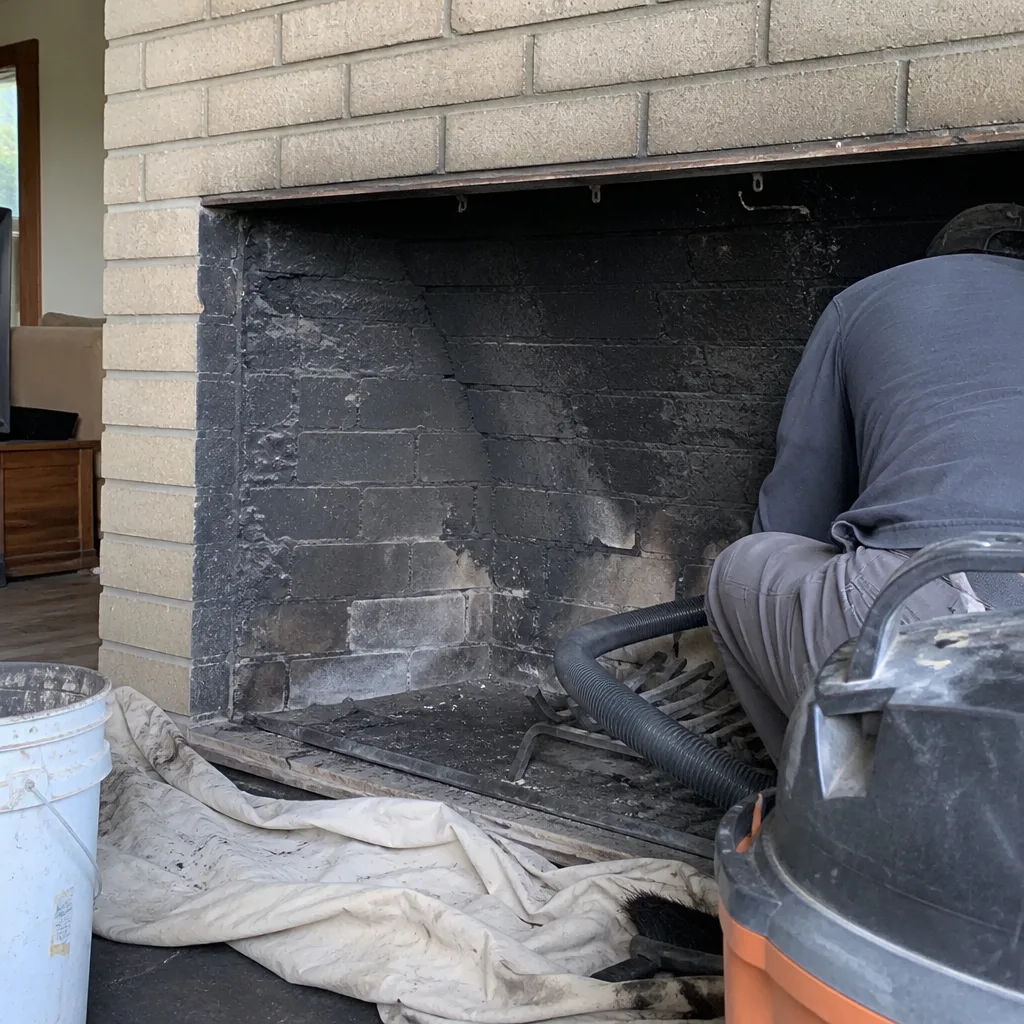 Before
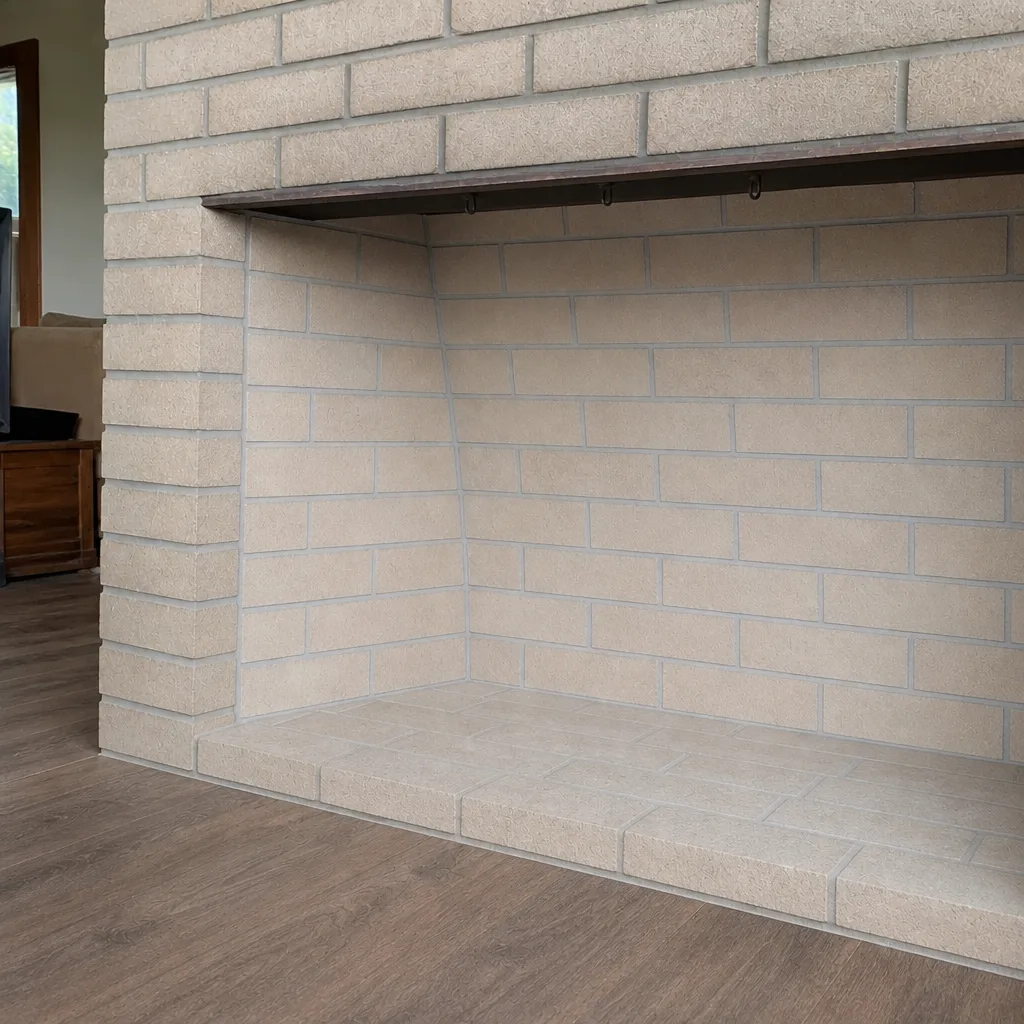 After
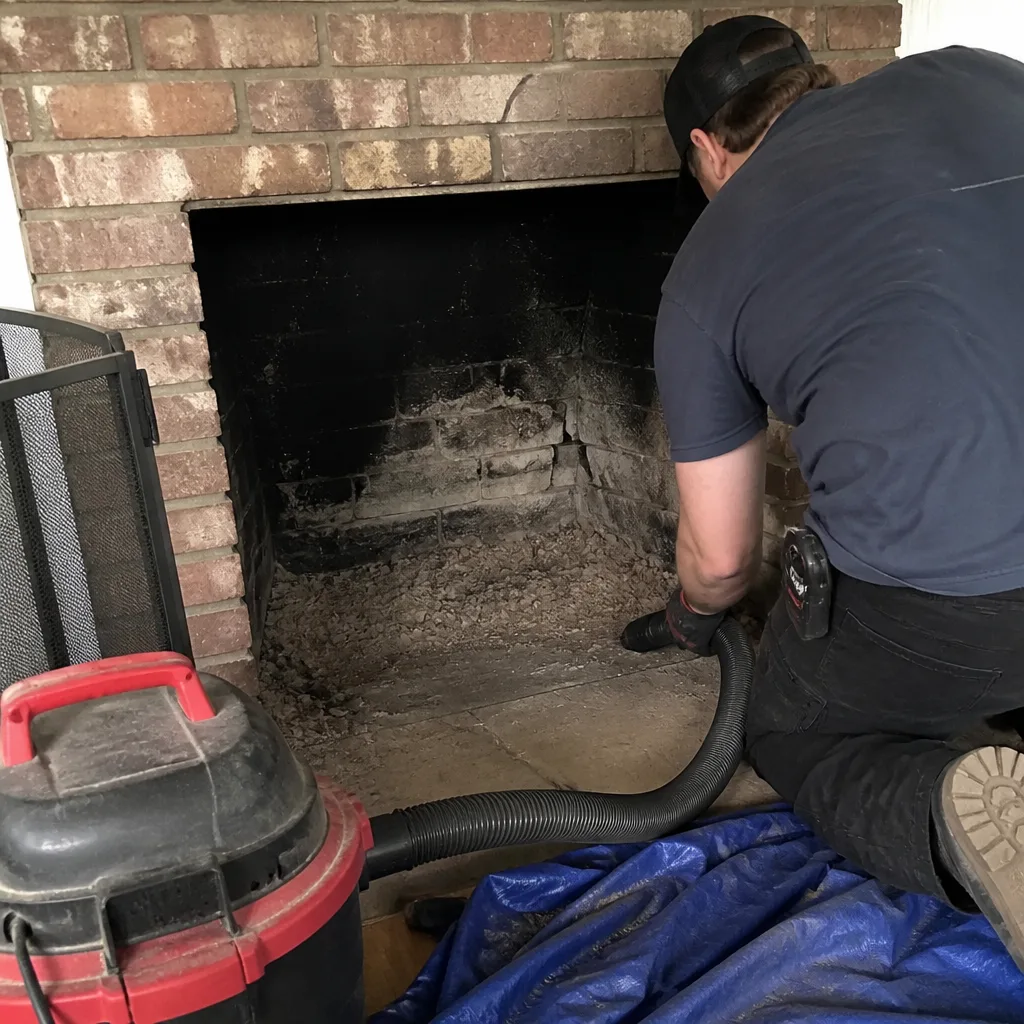 Before
 After
 Before
 After
When to Call a Professional
Call a professional if any of these apply to your Gresham home. You burn more than half a cord per year, you haven’t had an inspection in over two years, you’ve had a chimney fire, the fireplace smokes back into the room, there are water stains or efflorescence on the exterior, or you’re seeing cracked tiles or missing mortar anywhere on the chimney. Call if you have an insert or wood stove that requires pulling the appliance to reach the flue. Call if you’ve never had an inspection at all, even if the chimney looks clean.
Gresham Chimney Sweep offers free estimates in Gresham. Call (833) 538-5519. We answer 24/7. Fast dispatch from 7am to 7pm, Sunday through Friday. Every sweep includes camera inspection and a written summary, so you see exactly what we see before any repair is recommended.
Frequently Asked Questions
Yes, if your chimney is lightly used, has a straight flue, and has had a clean professional inspection within the last two seasons. A polypropylene brush sized to your flue and a proper rod set will clean soot and stage-1 creosote. What a brush can’t do is inspect the upper flue, check for cracks, or assess the smoke chamber. Those need a camera and a trained eye. If you’re not sure which category you’re in, the inspection is what tells you. Call (833) 538-5519 for a free estimate on a sweep and inspection – the estimate costs nothing and answers the question.
Once a year is the general standard for a fireplace in regular use, and for Gresham homes burning fir through the winter, that’s a reasonable baseline. Chimneys serving inserts or wood stoves used as primary heat often need sweeping more often than annually. If you burn damp wood, sweep more frequently, because the creosote load is higher. Call (833) 538-5519 to schedule an inspection and let the condition of your actual flue set the schedule rather than a general rule.
Creosote builds up in stages and each stage is harder to remove than the last. Stage 1 soot burns off easily, stage 2 is crusty and needs rotary brushing, and stage 3 is glazed and tar-like and requires professional removal. A stage-3 loaded flue is a fire hazard, and a chimney fire can crack the clay tile liner without the fire ever being visible from the firebox. Once the liner is cracked, the safety issue changes from fire to carbon monoxide. This isn’t a scare tactic – it’s the mechanical sequence. Call (833) 538-5519 for a sweep and camera inspection; you’ll see the flue condition on camera and can decide on repairs with evidence in hand.
You need a new liner when the existing liner cannot safely contain combustion gases – typically from cracked tiles, spalling, or gaps between sections. It’s not something we recommend without showing you the camera footage. If you get told you need a reline and nobody showed you the evidence, ask to see it. In our experience, some cracked liners can be restored with HeatShield resurfacing rather than full replacement, and we say so when that’s the case. A DuraFlex flexible liner is the standard for a full reline when resurfacing isn’t appropriate. Call (833) 538-5519 for a free estimate and a look at your actual flue before anything is authorized.
Sweeping is priced per job and set by a written estimate, and the estimate itself is free. Price depends on the flue length, the number of flues, the condition, and whether an insert needs to be pulled. The best way to know your price is to have an inspection quote in writing before any work begins. Call (833) 538-5519 for a free estimate – it’s the fastest way to know what your specific chimney needs.
Both are valid, and the choice depends on the chimney. Top-down sweeping works when the flue is straight, the cap or top damper can be removed safely, and the roof is accessible without putting you in danger. Bottom-up sweeping is common with inserts and stoves and is generally the professional approach for appliances that need the baffle cleared. For a homeowner, top-down is generally simpler to control because gravity helps. But it requires safe roof access and a flue cap that comes off cleanly. If the roof is a steep pitch or has a top-sealing damper, bottom-up or a professional sweep is the better path. Call (833) 538-5519 to have us look at access and advise.
The Bottom Line
DIY chimney cleaning is a legitimate option for lightly used fireplaces with clean inspection history and a straight flue, provided you have the right brushes, rods, and containment. It’s not a legitimate option for heavy use, for chimneys with no recent inspection, or for any chimney with a sign of damage, water intrusion, or prior fire. The three-filter framework – frequency, inspection date, and observable condition – gets you to a clear answer in two minutes. Brush if you pass all three; call if you don’t. The reason is simple: the brush tells you what came off, not what’s still there or what’s cracked underneath.
Gresham Chimney Sweep offers the full sweep, inspection, and repair loop with the same team, using professional-grade products from DuraFlex, HeatShield, Gelco, Famco, Olympia Chimney, and Copperfield. Call (833) 538-5519 for a free estimate. We answer 24/7. Fast dispatch from 7am to 7pm, Sunday through Friday. Estimates are free, and nothing gets recommended without camera evidence you can see for yourself. For more about Gresham Chimney Sweep and what we do, start there.
Written by the team at Gresham Chimney Sweep.